Blower Motor Repair & Replacement
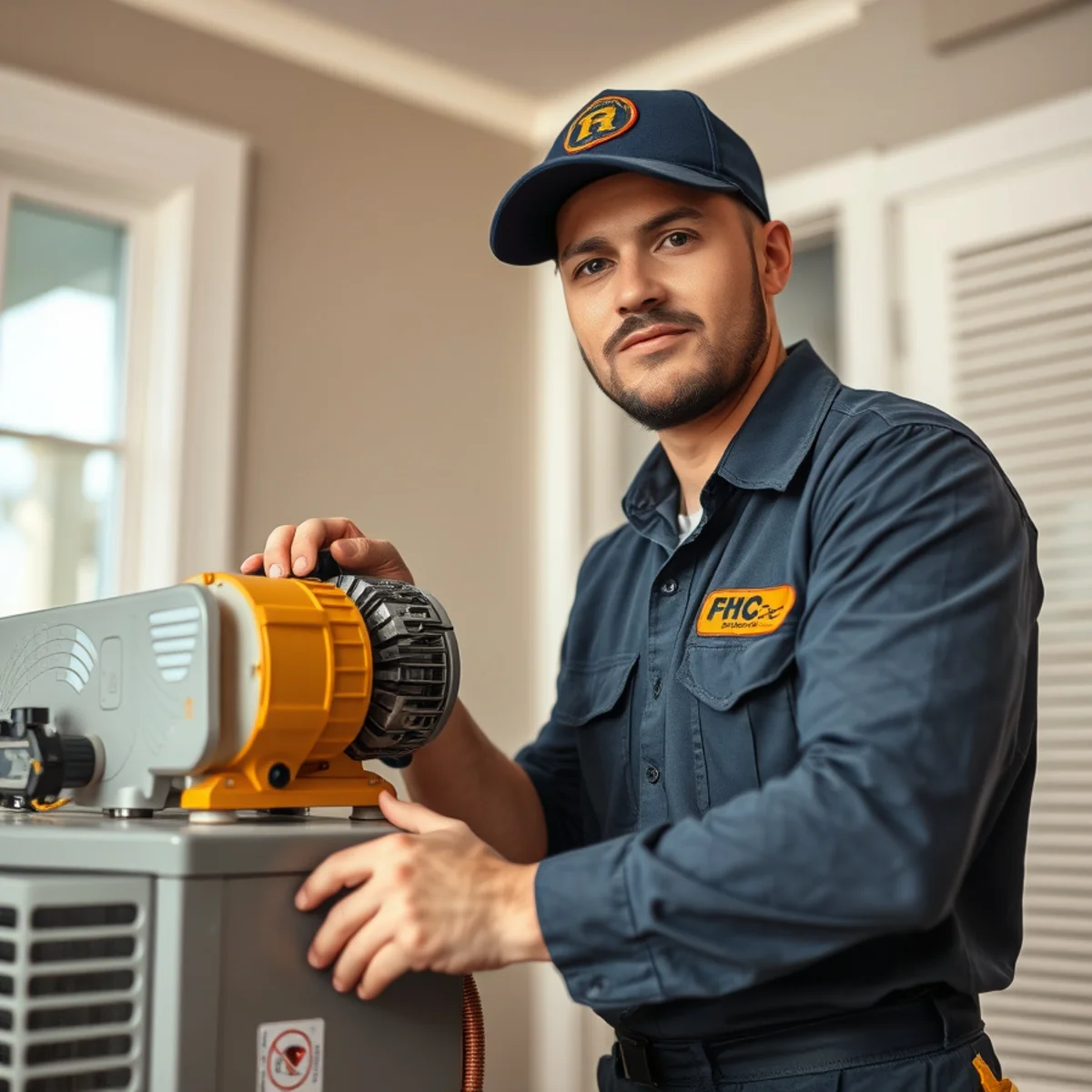
Diagnosing and fixing the blower motor that moves your air — fast, honest, and the same day when you need it.
Blower Motor Repair & Replacement
When the blower motor quits, your whole system goes quiet in the worst way: the furnace may be making heat or the AC may be making cold air, but nothing is reaching your rooms. In a Clayton, NC summer that means a house that climbs toward 90 degrees fast, and on a January cold snap it means heat that's trapped at the unit instead of flowing through your vents.
The blower motor is the heart of your airflow. It's the part that physically pushes conditioned air through your ductwork and into every room. When it struggles, fails, or short-cycles, you feel it everywhere at once, which is exactly why "no airflow" calls are some of the most urgent we get.
At Flaming Ice Heating & Cooling, owner and lead tech Travis diagnoses the real problem before recommending anything. We text before we arrive, explain what we find in plain English, and quote honest pricing with no upsell. Same-day and weekend emergency service is available across Clayton and the Triangle.
Quick Takeaways
- The blower motor moves all your conditioned air, so when it fails you lose airflow in every room at once — in both heating and cooling seasons.
- Common causes in Clayton homes include a failed capacitor, worn bearings, overheating from clogged filters, a burnt motor, or a control-board issue — not always the motor itself.
- We diagnose from the cheap end up, check capacitors and wiring before condemning a motor, and quote honest pricing with no upsell.
- PSC (single-speed) and ECM (variable-speed) motors are different parts; matching the right type and airflow setting matters for NC's humidity.
- Same-day and weekend emergency service is available across Clayton and the Triangle — call (327) 210-5999 when your air stops moving.
What the Blower Motor Actually Does
Your blower motor is the workhorse inside your furnace or air handler. It spins a fan wheel (the "squirrel cage") that draws return air in, pushes it across the heat exchanger or cooling coil, and forces it out through your supply ducts into every room of the house. The same motor moves air in both heating and cooling seasons, so when it fails, you lose comfort year-round, not just in winter.
Because one motor serves your entire home, a blower problem rarely shows up as a small issue. You don't get "a little less air in one room" — you get weak airflow everywhere, a system that runs constantly without keeping up, or a furnace that lights and then shuts itself off on a safety limit because nothing is carrying the heat away. That's why a blower motor that's on its way out deserves a fast, professional look rather than a wait-and-see approach.
How NC's Climate Pushes Blower Motors Hard
Clayton and the wider Triangle put a heavy, year-round load on blower motors. Our long, humid Carolina summers mean your system runs for hours at a stretch, and humidity is the hidden factor here: a healthy blower moving the right amount of air is what lets your coil pull moisture out of the house. When a motor weakens and airflow drops, your home can feel clammy and sticky even when the thermostat says it's cool — a classic sign airflow isn't what it should be.
Winter adds its own stress. Heat pumps, which are everywhere in North Carolina, ask the blower to run long cycles during cold snaps and through defrost cycles. All that runtime, combined with dust, pet hair, and the pollen that coats everything here each spring, means our motors and fan wheels simply work harder and collect more debris than they would in a milder, drier climate. That accelerated wear is a big reason local blower motors don't always reach the 10-to-20-year lifespan you'll read about in national averages.
Common Causes of Blower Motor Failure
Most blower problems we see in Clayton homes trace back to a handful of causes:
- A failed capacitor. The run capacitor gives the motor the jolt it needs to start and the steady push to keep spinning. When it weakens, you'll often hear a hum or buzz while the blower struggles to start, or the motor runs only intermittently. A capacitor is a common, affordable fix — and one we always check before condemning a motor.
- Worn bearings or a seized motor. Years of runtime wear out the bearings. The early warning is noise: squealing, grinding, or a low rumble. Left alone, the motor eventually overheats and seizes.
- Overheating and tripped breakers. A motor working against a clogged filter, dirty fan wheel, or restricted ductwork draws more current, runs hot, and can trip the breaker or burn out early.
- A burnt or shorted motor. A burning smell from the vents, scorched wiring, or a motor that fails an electrical test means the windings are gone, and replacement is the only safe answer.
- Control and wiring problems. Sometimes the motor is fine and the real culprit is a bad relay, blower control board, loose connection, or a tripped float switch on the drain pan. Honest diagnosis matters here — replacing a healthy motor wouldn't fix a board problem.
- A dirty or unbalanced fan wheel. Caked-on debris throws the wheel off balance, creates vibration, and forces the motor to strain. Cleaning the wheel can sometimes restore airflow without any new parts.
Our Diagnostic and Repair Process
We don't guess, and we don't lead with "you need a new motor." When Travis arrives, he starts at the simple, cheap end and works toward the expensive end only as the evidence requires.
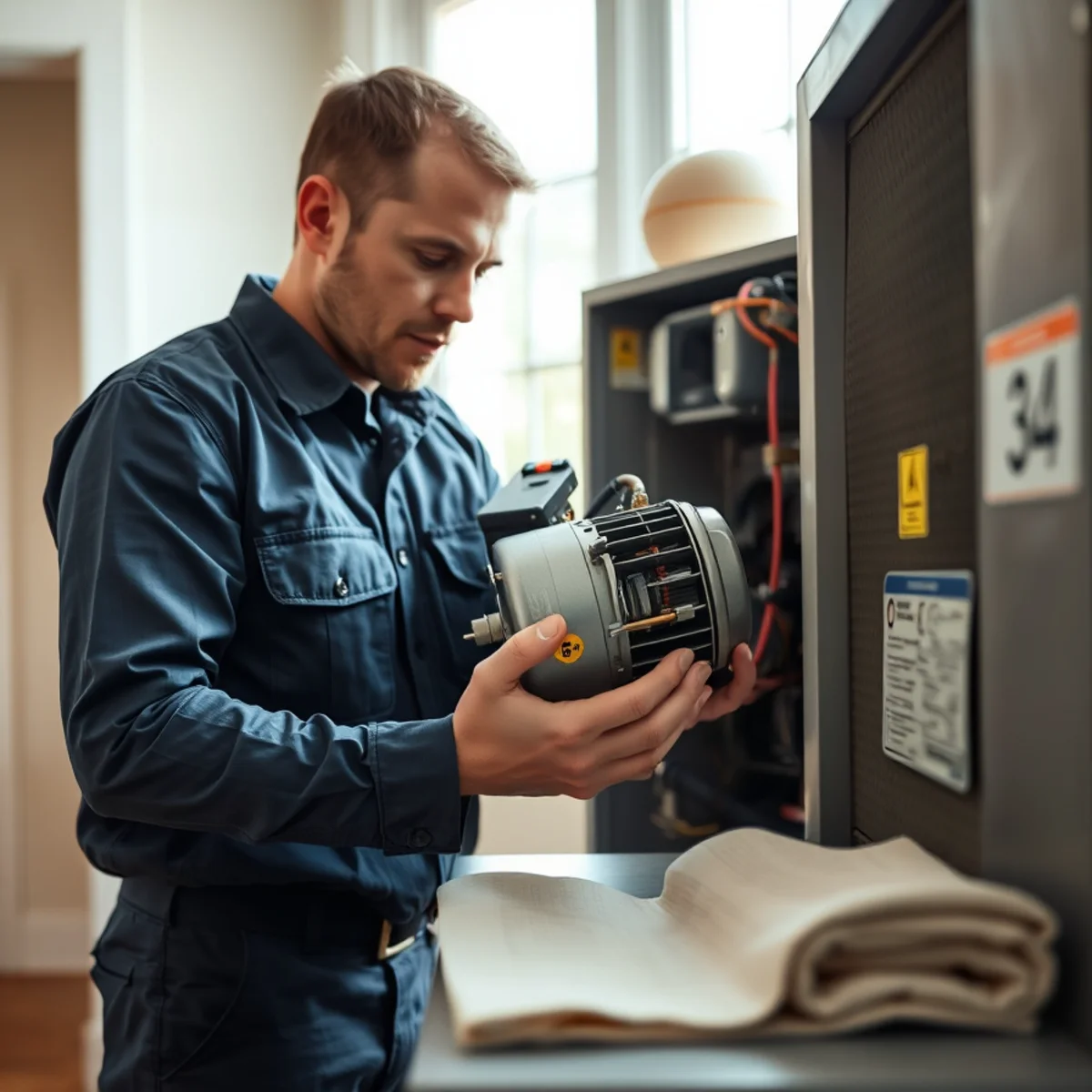
First we confirm the symptom and rule out the easy stuff — a tripped breaker, a clogged filter, a tripped safety switch, or a thermostat set wrong. Then we test the electrical side: capacitor microfarad readings, voltage at the motor, the control board, and the relay. We check the motor's amp draw against its rating, inspect the bearings and fan wheel, and look for any sign of overheating or burnt windings.
Once we know exactly what's wrong, we walk you through it. You'll hear what failed, why, what your options are, and an honest price for each path before any work begins. If it's a quick capacitor swap, we'll often have you back up and running the same visit. If the motor is shot, we'll show you the repair-versus-replace math instead of just handing you a bill.
PSC vs. ECM: Knowing What You Have Matters
Older systems use a PSC (permanent split capacitor) motor — a single-speed design that's straightforward and economical to replace. Many newer high-efficiency systems use an ECM (electronically commutated motor), a variable-speed motor that ramps up and down smoothly, runs much more efficiently, and does a better job wringing humidity out of NC air by running longer at lower speeds. ECM motors cost more as a part, and they're sometimes paired with their own control module. We'll always tell you which type your system has and make sure any replacement matches your equipment correctly, because the wrong motor or a mismatched module won't perform the way it should.
Repair or Replace? How We Help You Decide
The right call depends on what failed, the age of the motor, and the health of the system around it. We generally lean toward repair when the motor itself tests healthy and the problem is a supporting part — a weak capacitor, a loose wire, a dirty fan wheel, or a relay. Those fixes are affordable and get good years back out of your equipment.
We'll have an honest conversation about replacement when the motor overheats, won't start reliably, smells burnt, is loud from internal wear, or fails its electrical tests. Age matters too: if your furnace or air handler is well past a decade old and the motor is one of several parts nearing the end, sinking money into a motor for an aging system may not be your best value. We'll lay out the trade-offs and let you choose — no pressure, no scare tactics.
What to Expect, and the Value Behind the Service
A blower motor visit usually starts with a clear text before we arrive, a thorough diagnosis, and a plain-English explanation of the fix. Many repairs are completed the same day; a less common motor may need to be sourced, and we'll tell you that up front rather than leaving you guessing.
What goes into honest blower work isn't just the part. It's correctly matching the replacement to your system, setting the blower speed to the right airflow for your home and our humid climate, verifying amp draw and temperature rise after the repair, and confirming the fix actually solved the problem. Done right, a proper blower repair restores even airflow, quieter operation, better humidity control, and often a lower power bill, since a strained motor wastes energy.
If you're upgrading to a high-efficiency variable-speed system, you may qualify for programs like Duke Energy's Smart $aver, Energy Saver NC incentives, or federal tax credits — ask us and we'll point you in the right direction. To keep your blower healthy between visits, our real Flame Club maintenance plan includes the filter changes, fan-wheel cleaning, and electrical checks that prevent most premature failures in the first place.
As a minority-owned, owner-operated local small business with 71 Google reviews, we treat Clayton like the neighborhood it is. Whether you're dealing with a furnace that won't blow or no airflow from your AC in July, we're ready to help. Contact us or call when your air stops moving — we'll get it flowing again.
Signs You Need This Service
- Weak or no airflow from the vents while the system runs
- The system turns on but no air moves
- Humming sound but the blower won't spin up
- Grinding, rattling, or squealing from the air handler or furnace
- The motor runs then overheats and shuts off
- A burning or hot-electronics smell near the unit
- The blower runs constantly and won't shut off
What Our Blower Motor Repair & Replacement Includes
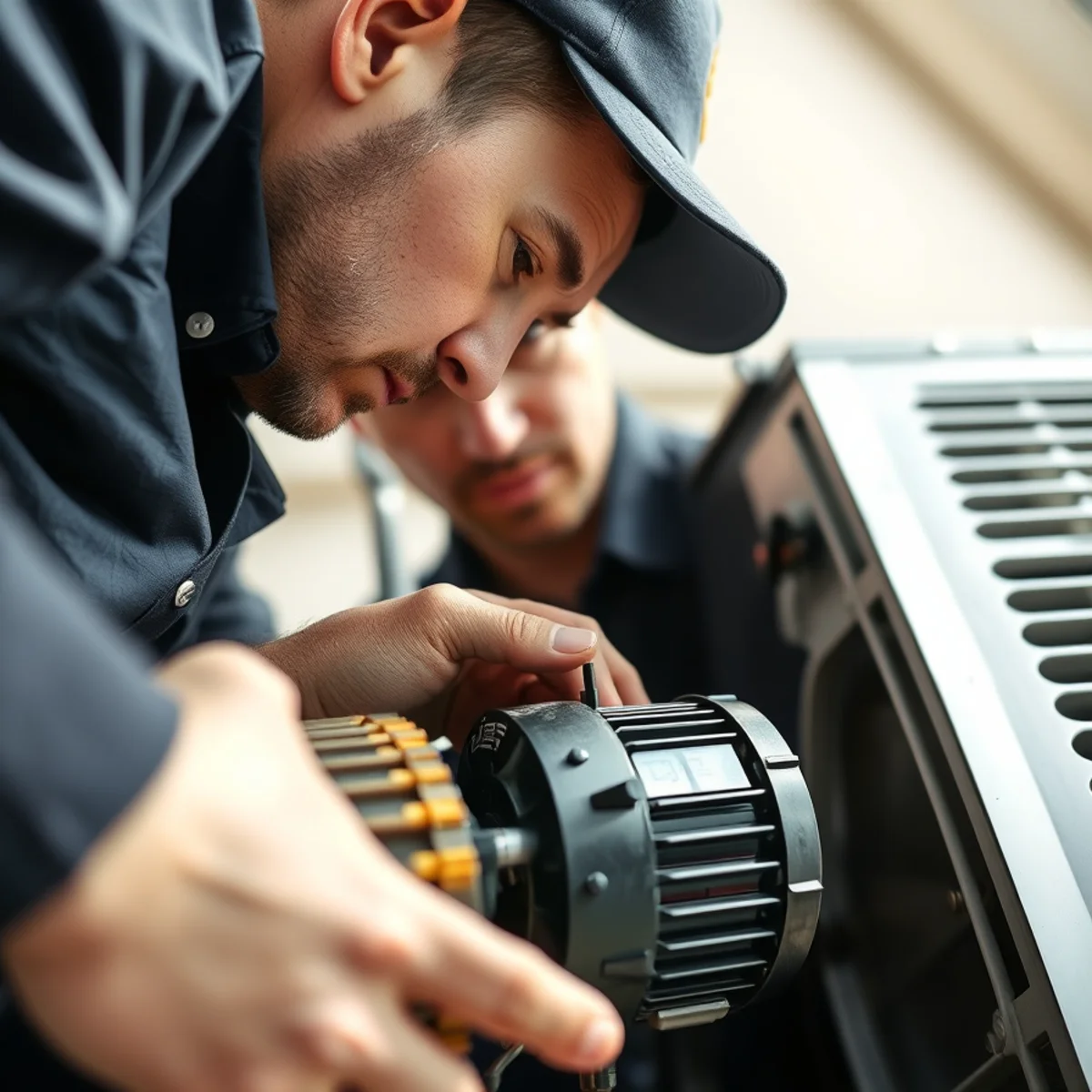
- Full diagnostic of the blower motor and its controls
- Testing of the capacitor, control board, and wiring
- Clear explanation of whether it's the motor or a cheaper fix
- Up-front pricing before any repair begins
- Motor or component replacement with the correct part
- Airflow and system verification before we leave
Why Choose Flaming Ice
- We test the whole circuit, not just swap the motor
- Same-day and weekend availability when you've lost airflow
- Honest diagnosis — sometimes it's a cheap capacitor, and we'll say so
- Owner-operated, with a text before we arrive
Owner-Operated Care
You deal with Travis and an accountable local team on every job.
Same-Day & 24/7
Fast same-day and weekend emergency service when comfort can't wait.
Honest, No-Upsell
Clear options and fair pricing — backed by 71 local reviews.
How Our Blower Motor Repair & Replacement Works
- 1Honest diagnosisWe inspect your system and pinpoint the real cause — no guesswork.
- 2Clear options & upfront priceYou see your options in plain English and approve the price before we start.
- 3Clean, careful workWe complete the approved blower motor repair & replacement and treat your home with care.
- 4Tested before we leaveWe verify comfort, airflow, and performance, then walk you through it.
Our No-Surprise Pricing Promise
HVAC pricing shouldn't be a mystery. We explain what's going on, lay out your options in plain English, and get your approval before we touch a thing — so the price we quote is the price you pay.
Get an Honest Quote- A clear diagnosis before any work begins
- Upfront, written options — you approve the price first
- No hidden fees and no high-pressure upsells
- Honest repair-vs-replace advice for your budget
Related Services
Air Handler Repair & Replacement
Repair and replacement for the indoor unit that moves conditioned air through your home.
Learn MoreCapacitor & Contactor Replacement
Fast fixes for two of the most common AC failures — the capacitor and contactor that start and run your system.
Learn MoreEmergency HVAC Service
Same-day and weekend HVAC help when your heating or cooling quits and you can't wait.
Learn MoreBlower Motor Repair & Replacement Across North Carolina
We bring this service to Clayton and communities throughout the state.
Blower Motor Repair & Replacement FAQs
Very likely, but not always. A dead blower motor, a failed capacitor, a bad control board, or a tripped safety switch can all cause heat with no airflow. Start by checking your filter and breaker, then call us. We'll test the motor, capacitor, and controls to find the real cause instead of replacing parts on a guess.
Watch for weak airflow from the vents, humming or buzzing when it tries to start, squealing or grinding noises, a burning smell, frequent breaker trips, or a system that runs nonstop without keeping up. A clammy, humid feeling indoors during a Clayton summer is also a tell-tale sign airflow has dropped.
It depends on what failed. If the motor tests healthy and the problem is a capacitor, a loose wire, or a dirty fan wheel, a repair is usually the smart, affordable choice. If the motor is burnt, seized, very noisy from wear, or fails its electrical tests — especially on older equipment — replacement is the better value. We'll show you the trade-offs and let you decide.
Often, yes. Capacitor and common-motor repairs are frequently completed on the first visit, and we offer same-day and weekend emergency service across Clayton and the Triangle. If your system uses a less common or variable-speed ECM motor that has to be sourced, we'll tell you up front and get it handled as fast as possible.
A PSC motor runs at one fixed speed and is simpler and cheaper to replace. An ECM is a variable-speed motor that ramps smoothly, runs more efficiently, and controls humidity better by running longer at lower speeds — a real advantage in North Carolina. ECM parts cost more and sometimes include a control module. We'll tell you which one your system uses.
Yes. Flaming Ice Heating & Cooling is based at 356 N Farm Dr in Clayton, NC, and we serve Clayton, the greater Triangle, and surrounding North Carolina communities for both residential and light commercial blower motor repair and replacement.
Usually it's airflow restriction. A clogged filter, a dirty fan wheel, closed or blocked vents, or undersized ductwork forces the motor to work harder, run hot, and wear out early. Our Flame Club maintenance plan catches these issues with regular filter changes, fan-wheel cleaning, and electrical checks before they cook your motor.
Not always. No airflow can come from the motor itself, a failed run capacitor, a control board, a tripped safety, or a wiring problem. That's why we test the full circuit before quoting a repair. Sometimes the fix is a relatively inexpensive capacitor rather than a whole motor, and we'll always tell you which it is.
Ready for Blower Motor Repair & Replacement?
Call Flaming Ice Heating & Cooling for blower motor repair & replacement in Clayton, NC and across North Carolina.